

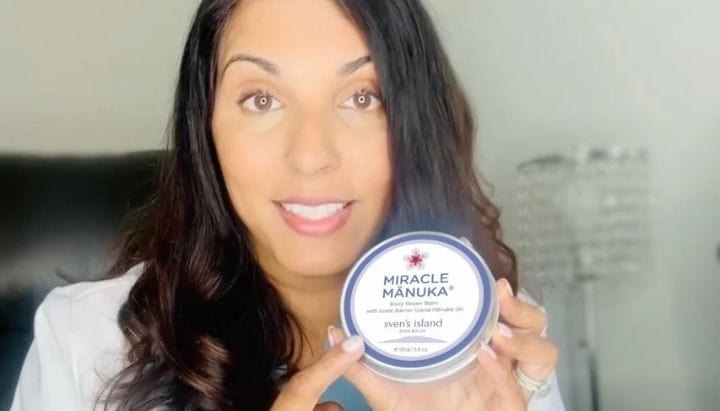
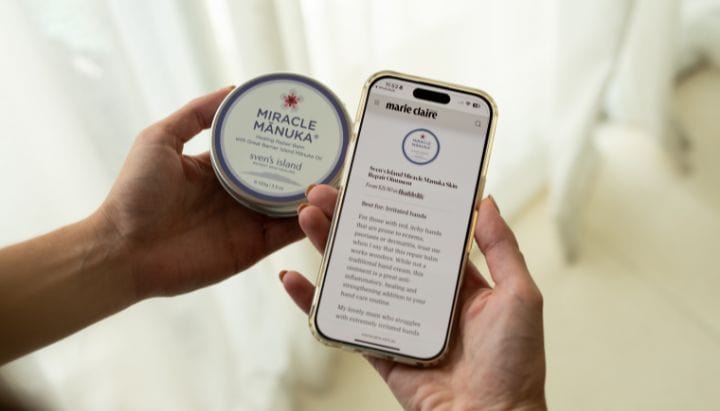


300+ clinicians, doctors, and dermatologists have shared Svens Island for eczema relief, with no compensation.
You've tried the creams. The bath time routines. The dietary changes your friend swore by. The prescription your doctor gave you that cleared it for a week before it came back worse.
And still – the scratching starts before they're even fully awake. The nights where neither of you sleeps. Feeling helpless and guilty watching your child suffer.
This article explains what's actually driving toddler eczema, what treatments are safe for young skin, and what consistent management looks like in practice.
Why Toddler Eczema Is Different
Toddler skin is structurally different from adult skin — and those differences matter for how eczema presents and how it's managed.
The outermost layer of a toddler's skin is thinner and more permeable than adult skin. The barrier develops and matures over the first few years of life, which means toddlers are particularly vulnerable to moisture loss, irritant penetration, and bacterial colonization. Many toddlers with eczema also carry a genetic variant that reduces their production of filaggrin — the protein that holds the skin barrier together — a structural weakness that's often present from birth.
The result is skin that dries out faster, reacts to smaller triggers, and is significantly harder to keep calm than adult eczema-prone skin.
The Role of Staph in Toddler Eczema
One of the most important — and most commonly missed — factors in toddler eczema is the role Staphylococcus aureus (Staph) plays.
Research shows that Staph is present on the skin of up to 90% of eczema-prone skin during flares.¹ In toddlers, whose barrier is particularly permeable, Staph has an easier route to colonize the skin surface and disrupt the barrier repair process.
Staph doesn't cause eczema — but its toxins directly stimulate itch receptors, intensify the immune response, and make flares harder to resolve. It's one of the main reasons toddler eczema can feel like it never fully clears — even when the visible redness settles, Staph levels on the skin remain elevated, keeping the skin vulnerable to the next trigger.
This is also why standard moisturizers often aren't enough. They address dryness but don't touch the bacterial environment that keeps the cycle going.
What's Safe for Toddler Skin
The first concern for most parents is safety. Toddler skin is more absorbent than adult skin, which means ingredients penetrate more readily — making formulation choices even more important.
Steroid creams are commonly prescribed for toddler eczema and are effective at calming acute flares. They're generally safe for short-term use under medical guidance — but they don't repair the barrier or address Staph, and frequent use on thin toddler skin carries a higher risk of skin thinning than in adults. Guidelines emphasize using the lowest effective potency for the shortest time, combined with consistent barrier care to reduce reliance on steroids.³
Emollients and barrier repair products are the foundation of daily management and safe for long term use. Look for fragrance-free formulations designed for eczema-prone skin from birth. Avoid fragrances, preservatives like methylisothiazolinone, and essential oils — common irritants even in "natural" products.
Antimicrobial botanical ingredients such as Manuka leaf oil have been studied for their ability to fight Staph without stinging or side effects — suitable for daily use on toddler skin.
Wet wrap therapy can provide meaningful relief during severe flares — applying a barrier cream under damp bandages and a dry layer forces hydration into the skin and creates a physical barrier against overnight scratching. Studies in children show it can significantly improve symptoms when used appropriately alongside standard care.⁴
The Overnight Problem
For most parents of toddlers with eczema, nights are the hardest part.
Toddlers spend more time in lighter sleep stages than adults — which is exactly when the itch signal is strong enough to trigger scratching but not strong enough to fully wake them. The result is unconscious scratching that damages the barrier, increases Staph levels, and leaves the skin worse by morning.
Skin temperature rises overnight, which amplifies itch. The warm, slightly moist environment under bedding is also ideal for Staph to increase on the skin surface.
Applying a barrier-supportive product after bathing while skin is still slightly damp locks in moisture and addresses the bacterial driver that builds through the night. Keeping the bedroom cool, using cotton or bamboo bedding washed in fragrance-free detergent, and trimming nails short all make a measurable difference.
Building a Daily Routine That Works
The most common mistake in toddler eczema management is treating it reactively — applying products when the skin is bad and stopping when it clears. The barrier is still fragile when the skin looks calm. Staph levels are still elevated. The conditions for the next flare are already present.
Effective management requires a consistent daily routine applied through both flares and the periods between them.
-
Morning and evening: Apply a barrier-supportive product to clean, slightly damp skin. The window immediately after bathing — before the skin fully dries — is when absorption is highest and the barrier benefits most from what's applied.
-
Bathing: Lukewarm water, ten minutes maximum, soap-free cleanser. Gently pat dry rather than rubbing. Avoid bubble baths and products with fragrance — these are among the most common irritants for toddler skin.
-
Between flares: The most important time. Consistently applying barrier-supportive products every day during calm periods is what gives the barrier a real opportunity to strengthen.
-
During flares: Continue the daily routine and add prescribed treatments as directed by your doctor.
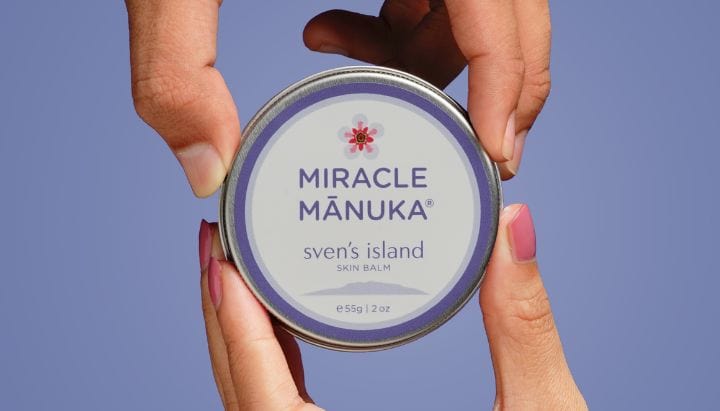
Sven's Island Miracle Manuka Cream is formulated for exactly this kind of consistent daily use — Manuka leaf oil and marshmallow root for bacterial balance and barrier repair, steroid-free, dermatologist-recommended, and safe from birth. 
What the Research Shows
Toddler eczema is driven by an immature, more permeable skin barrier combined with frequent Staphylococcus aureus colonization that worsens inflammation and itch.
A major 2016 systematic review and meta-analysis found that patients with atopic dermatitis are far more likely to carry Staph than healthy controls, with prevalence on lesional skin reaching up to 70% overall and rising significantly with disease severity — often described as up to 90% during flares in severe cases.¹ ²
Many people with eczema carry a genetic mutation that reduces filaggrin production: leading to increased dryness, reduced natural moisturizing factors, and greater permeability in toddlers.⁵
Topical corticosteroids effectively calm acute flares when used at the lowest effective potency for the shortest time, always alongside daily emollients.³
Wet wrap therapy has also shown benefit as a short-term intervention for children with moderate-to-severe eczema under medical guidance.⁴
In plain terms: Research confirms that consistent daily care targeting both the fragile skin barrier and the Staph bacteria works better than reacting only when flares appear.
When to See a Doctor
Most baby eczema can be managed at home with a consistent daily routine. See a doctor if you notice signs of bacterial infection — honey-colored crusting, yellow or white discharge, pustules, or skin that's painful rather than itchy. These suggest Staph has moved from surface colonization into true infection and may require antibiotics.
If eczema isn't responding after four to six weeks of consistent management, or if it's affecting large areas, significantly disrupting sleep, or causing distress, a doctor or dermatologist referral is appropriate. Any fever, feeling generally unwell, or rapidly spreading skin warmth and swelling requires same-day medical assessment.
Frequently Asked Questions
What is the best treatment for baby eczema?
Effective management combines consistent barrier repair with addressing the staph bacteria driving the itch. The foundation is a fragrance-free, barrier-supportive product applied daily. Steroid creams prescribed by a doctor are appropriate for acute flares. A product that also addresses Staph — such as one containing Manuka leaf oil — works on the bacterial driver that steroids and standard moisturizers can't reach.
Are steroid creams safe for babies?
Short-term use under medical guidance is generally considered safe. Baby skin is thinner and more absorbent, making frequent or prolonged use riskier than in adults. Most dermatologists recommend the lowest effective potency for the shortest necessary period, alongside a consistent barrier routine that reduces how often steroids are needed.
Why does my baby's eczema keep coming back?
Most treatments address visible symptoms without touching the underlying drivers — a compromised barrier and elevated Staph. When treatment stops, both problems remain. Consistent daily barrier and bacterial balance support between flares is what gradually changes the baseline.
How do I stop my baby scratching at night?
Keep the bedroom cool, use natural-fiber bedding washed in fragrance-free detergent, apply a barrier and bacterial balance product before bed, and keep nails trimmed short. For heavy scratchers, lightweight cotton gloves help. Addressing the underlying itch drivers — Staph overgrowth and barrier weakness — is what reduces the signal over time.
At what age does baby eczema go away?
Many children improve significantly as the skin barrier matures. Some outgrow eczema by school age; others manage it into adolescence and beyond. Consistent barrier support during early childhood gives the skin the best chance of strengthening over time.
Final Thought
Baby eczema isn't a reflection of how well you're caring for your child. It's a biological condition driven by a structurally vulnerable barrier and a bacterial environment that most standard treatments never address.
Consistency is key. A daily routine that supports the barrier and keeps Staph levels low changes the baseline over weeks and months — fewer flares, less severe when they do come, and a better night's sleep for everyone.
You're not failing. You just need an approach that addresses the right things.
References
¹ Totté JEE et al. (2016). Prevalence and odds of Staphylococcus aureus carriage in atopic dermatitis: a systematic review and meta-analysis. British Journal of Dermatology, 175(4):687-695. https://doi.org/10.1111/bjd.14566
² Wang Z et al. (2024). Understanding the role of Staphylococcus aureus in atopic dermatitis: strain diversity, microevolution, and prophage influences. Frontiers in Medicine, 11:1480257. https://doi.org/10.3389/fmed.2024.1480257
³ NICE guideline CG57. Atopic eczema in under 12s: diagnosis and management. https://www.nice.org.uk/guidance/cg57
⁴ Hindley D et al. (2006). A randomised study of “wet wraps” versus conventional treatment for atopic eczema in children. Archives of Disease in Childhood, 91(2):164-168. https://doi.org/10.1136/adc.2004.050831
⁵ Gupta J et al. (2021). Filaggrin gene mutations with special reference to atopic dermatitis. Indian Journal of Dermatology. https://pmc.ncbi.nlm.nih.gov/articles/PMC7880084/
Don’t Miss These
Works well with Eczema prone skin


