How to Get the Best Results with Miracle Manuka

Most people don’t come to Svens Island looking for a miracle.
They come after years of trying creams that worked briefly or not at all. Steroids that helped, then created new worries. Natural products that sounded promising, but didn’t last.

This page is here to help you get the best possible results from your routine.

We’ll walk you through how Miracle Manuka works, what to expect over time, and how to use it in a way that gives your skin the best chance to finally settle.

What to Expect

Week 1

Itching often starts to calm and skin feels more comfortable. Flare-ups may still happen, this is normal while the skin adjusts.

Week 2

Redness may begin to settle and skin feels less reactive. Consistency is key, even as things start to improve.

Week 3

Skin often feels more stable, with fewer sudden flare-ups. Comfort lasts longer between flare-ups.

Itching often starts to calm and skin feels more comfortable. Flare-ups may still happen, this is normal while the skin adjusts.

Redness may begin to settle and skin feels less reactive. Consistency is key, even as things start to improve.

Skin often feels more stable, with fewer sudden flare-ups. Comfort lasts longer between flare-ups.

What to Expect

How Miracle Manuka Works

Miracle Manuka is designed to support eczema-prone skin in two important ways.

First, it helps reduce the bacteria commonly linked to eczema flare-ups. Mānuka and Kānuka leaf oils are known for their antimicrobial properties, helping create a calmer environment on the skin without the harshness many people are trying to avoid.

Second, it helps support and protect the skin barrier. Ingredients like marshmallow root help soothe fragile, irritated skin while locking in comfort and moisture over time.

We call this our PhytoBarrier™ approach — a bacteria-aware, barrier-first way of supporting skin so it can become calmer, stronger, and less reactive with consistency.

How to use

Step 1 — Calm active flare-ups

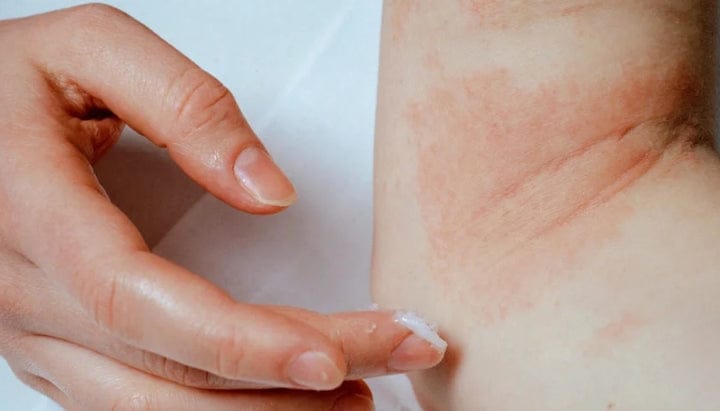
Use the balm on areas that feel itchy, red, cracked, or irritated.
Apply a thin layer 2–3 times daily to help soothe discomfort and support the skin while it settles.

Step 2 — Build a daily routine

Use the crème morning and night to keep your skin calm and supported.
This helps strengthen the skin barrier over time — even when your skin starts to look better.

Step 3 — Stay consistent (this is key)

Keep using it daily, not just during flare-ups.
Most people see the best results when they stay consistent for 3–6 weeks, allowing the skin time to rebuild and stabilise.

Use the balm on areas that feel itchy, red, cracked, or irritated.
Apply a thin layer 2–3 times daily to help soothe discomfort and support the skin while it settles.

Use the crème morning and night to keep your skin calm and supported.
This helps strengthen the skin barrier over time — even when your skin starts to look better.

Keep using it daily, not just during flare-ups.
Most people see the best results when they stay consistent for 3–6 weeks, allowing the skin time to rebuild and stabilise.

How to use

FAQ: Everything you need to know

For best results, consistency matters more than anything else.

Most people use it 2–3 times per day, especially in the beginning.


Morning and night is a good baseline, with an extra application during flare-ups if needed.


Even when your skin starts to feel better, it’s important to keep using it daily — that’s what helps keep your skin stable over time.

This is one of the most common mistakes.

It can help during a flare — but it works best when it’s part of your daily routine, not just something you reach for when things feel bad.

Using it consistently helps support your skin barrier and makes flare-ups less likely to come back as often.

It’s different for everyone, but most people notice changes in stages.
In the first few days, the itch often starts to settle.
By weeks two to three, skin usually feels calmer and less reactive.

Over 3–6 weeks, many people notice fewer flare-ups and more stable skin.

The key is staying consistent — results tend to build over 30–40 days.

That’s completely normal.

Skin that’s been irritated for a long time needs time to settle.

Often the first signs of progress are subtle — like less itching or better sleep — before visible changes happen.

If you’re not seeing big changes in the first week, don’t panic.

Consistency is what allows your skin to improve over time.

For some people, there can be a short adjustment period.

This can happen as your skin starts to rebalance and rebuild. It doesn’t happen to everyone, but if it does, it’s usually temporary.

If anything feels unusual or you’re unsure, reach out to us — we’ll help guide you through what’s normal and what to do next.

They use the same core ingredients — but they’re designed for different roles.

The balm is thicker and best for targeted areas, flare-ups, cracked or irritated skin.

The crème is lighter and designed for daily use to help keep your skin calm and supported over time.

Most people get the best results using both together as a simple routine.

If you’re using both:

Start with the balm on active flare areas, then apply the crème over the top or surrounding skin.

The balm focuses on calming problem areas, while the crème supports the wider skin barrier.

Yes — it’s gentle and commonly used on areas like the face, neck, scalp, and even around the eyes.

If you’re using it on very sensitive areas, start with a small amount and see how your skin responds.

Yes — it’s designed to be gentle, non-stinging, and safe from birth.

Many families use it for babies, toddlers, and children with sensitive or eczema-prone skin.

You don’t need a thick layer.

thin, even layer is usually enough.

It’s better to apply small amounts consistently than large amounts occasionally.

This is where many people see flare-ups return.

Even when your skin looks better, the barrier is still rebuilding underneath.

Stopping too early can lead to the cycle starting again.

Continuing with daily use helps keep your skin stable long-term.

Many people do, especially if they’re transitioning away from other products.

If you’re using multiple products, keep your routine simple and give your skin time to adjust.

If you’re unsure how to combine them, feel free to reach out and we’ll guide you.

Eczema Skin Tip & Advice

View all tips & advice
Is Your Shower Too Hot? A Dermatologist Reveals the Heating Habits Quietly Damaging Your Skin This Winter

Is Your Shower Too Hot? A Dermatologist Reveals the Heating Habits Quietly Damaging Your Skin Thi...

· 6 min Read
KEY TAKEAWAYS Hot showers can strip the skin's natural lipid barrier, making skin dry, tight, and reactive. Keep the shower...
Read Article
Eczema vs Psoriasis: How to Tell the Difference

Eczema vs Psoriasis: How to Tell the Difference

· 12 min Read
KEY TAKEAWAYS Eczema and psoriasis are both chronic inflammatory skin conditions, but they involve different immune pathways and have distinct...
Read Article
Eczema at School: How to Help Your Child Manage Flares, Itching, and Confidence

Eczema at School: How to Help Your Child Manage Flares, Itching, and Confidence

· 13 min Read
KEY TAKEAWAYS Eczema affects around 1 in 5 American school-age children — making it one of the most common chronic...
Read Article
The Microbiome and Eczema: How Bacteria on Your Skin Can Work For (and Against) You

The Microbiome and Eczema: How Bacteria on Your Skin Can Work For (and Against) You

· 10 min Read
Key Takeaways Your skin hosts trillions of microorganisms — bacteria, fungi, and other microbes — that together form your skin...
Read Article
Contact Dermatitis: Causes, Triggers and How to Manage It

Contact Dermatitis: Causes, Triggers and How to Manage It

· 14 min Read
KEY TAKEAWAYS  Contact dermatitis is an inflammatory skin reaction caused by direct contact with an irritant or allergen — not...
Read Article
Eczema in Adults: Why It Gets More Complicated (And What Actually Helps)

Eczema in Adults: Why It Gets More Complicated (And What Actually Helps)

· 13 min Read
KEY TAKEAWAYS Eczema affects around 10% of adults — and around 1 in 4 adult eczema cases begin in adulthood,...
Read Article
Baby & Infant Eczema: A Parent's Guide to Calmer Skin

Baby & Infant Eczema: A Parent's Guide to Calmer Skin

· 15 min Read
Key Takeaways Baby eczema affects around 1 in 5 infants in America — most cases appear in the first six...
Read Article
What Is an Eczema Flare? How to Recognise One Early and Respond Before It Escalates

What Is an Eczema Flare? How to Recognise One Early and Respond Before It Escalates

· 10 min Read
Key Takeaways An eczema flare is an acute worsening of symptoms driven by barrier breakdown and bacterial imbalance Flares follow...
Read Article
Is Eczema Genetic? What the Science Says (And What You Can Actually Control)

Is Eczema Genetic? What the Science Says (And What You Can Actually Control)

· 10 min Read
Key Takeaways  Eczema has a strong genetic component — identical twin studies show heritability of around 75%, but concordance is...
Read Article
Transepidermal Water Loss (TEWL): The Hidden Mechanism Behind Dry, Eczema-Prone Skin

Transepidermal Water Loss (TEWL): The Hidden Mechanism Behind Dry, Eczema-Prone Skin

· 10 min Read
Key Takeaways Transepidermal water loss (TEWL) is the rate at which water passively evaporates through the skin — and in...
Read Article
The Eczema Flare Cycle: How Each Stage Triggers the Next (And Where to Intervene)

The Eczema Flare Cycle: How Each Stage Triggers the Next (And Where to Intervene)

· 9 min Read
Key Takeaways Eczema flares follow a self-reinforcing cycle: barrier damage → inflammation → Staph colonisation → itch → scratching →...
Read Article
Wet Wrap Therapy for Eczema: What It Is and When It Actually Helps

Wet Wrap Therapy for Eczema: What It Is and When It Actually Helps

· 9 min Read
Key Takeaways Wet wrap therapy involves applying a moisturiser to eczema-affected skin, covering with a damp layer, then a dry...
Read Article
Why Most Eczema Creams Only Treat the Surface (And What to Look for Instead)

Why Most Eczema Creams Only Treat the Surface (And What to Look for Instead)

· 10 min Read
Key Takeaways Many eczema creams are designed to moisturize — they add water and occlusives back to the skin barrier,...
Read Article
Atopic Dermatitis vs Eczema: Is There Actually a Difference?

Atopic Dermatitis vs Eczema: Is There Actually a Difference?

· 12 min Read
Key Takeaways "Eczema" and "atopic dermatitis" are often used interchangeably — but they don't mean exactly the same thing. Eczema...
Read Article
Why Your Eczema Won’t Heal (And How to Break the Cycle)

Why Your Eczema Won’t Heal (And How to Break the Cycle)

· 8 min Read
Eczema that keeps coming back isn’t random.It’s a predictable pattern... You calm it down, your skin starts to improve, and...
Read Article
Directions for Use Sven’s Island USA LLC

Important Notice: The following instructions are provided for informational purposes only and do not constitute medical advice. Our products are cosmetic in nature and not intended to diagnose, treat, cure, or prevent any disease. Always consult your healthcare provider before starting any new skin care regimen, especially if you have known skin conditions, allergies, or are under medical care.

How to Use: 1. Clean and dry the affected area before application. 2. Apply a small amount of ointment to the affected area and gently rub until absorbed. 3. Reapply as needed, up to 3–4 times per day. 4. For external use only. Avoid contact with eyes, mouth, and mucous membranes.

Cautions: 1. Patch Test Recommendation: Before first use, perform a patch test on a small area of skin to check for sensitivity. Discontinue use if irritation occurs. 2. If symptoms persist, worsen, or if a rash develops, stop using the product and consult a healthcare professional. 3. Keep out of reach of children. If swallowed, seek medical attention immediately. 4. Store in a cool, dry place, away from direct sunlight.

Allergy Notice: This product contains natural essential oils and botanical extracts, which may cause an allergic reaction in some individuals. If you experience redness, itching, or discomfort, discontinue use and consult a healthcare professional. Use at your own risk.

Disclaimer: - Individual results may vary. While many customers report noticeable improvement, outcomes depend on skin type and other personal factors. - This product is not intended to diagnose, treat, cure, or prevent any disease. These statements have not been evaluated by the U.S. Food and Drug Administration (FDA). - Sven’s Island USA LLC shall not be held liable for allergic or adverse skin reactions. By using this product, you acknowledge that you have read and understood these instructions and disclaimers, and you assume full responsibility for use.