




300+ clinicians, doctors, and dermatologists have shared Svens Island for eczema relief, with no compensation.
You manage to get through the day. Distracted, busy, managing.
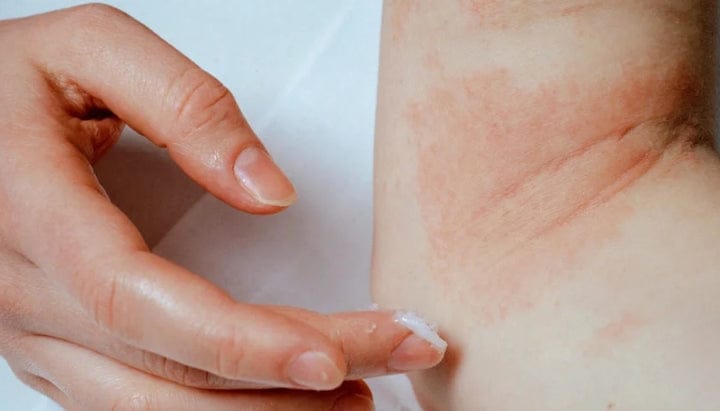
Then you lie down, and within minutes the itch starts. It builds. You scratch without even realising. By 2am you're wide awake, your skin is raw, and tomorrow you'll be exhausted and do the whole thing again.
If this is your night, you're not imagining it. Eczema genuinely does get worse after dark. There are real biological reasons why - and understanding them changes how you manage it.
The Short Answer
Eczema gets worse at night because several things happen simultaneously once you lie down:
-
Your skin loses more moisture in the evening hours
-
Your body temperature rises, which intensifies itch signals
-
Cortisol - the hormone that naturally suppresses inflammation - drops to its lowest point overnight
-
Distractions disappear, so every sensation is amplified
-
Bedding and warmth create friction and heat that irritate already-sensitive skin
None of these are things you're doing wrong. They're part of your body's natural overnight rhythm. The problem is that eczema-prone skin is poorly equipped to handle them.
How Your Circadian Rhythm Turns Up the Itch
Your body follows a 24-hour internal clock - called the circadian rhythm - that regulates almost every biological process, including inflammation, skin temperature, and immune activity.
For most people, this rhythm is invisible. For people with eczema, it becomes very noticeable after dark.
Cortisol is one of the main reasons. This hormone is released by the adrenal glands and has a powerful anti-inflammatory effect on the body. Levels are highest in the morning - which is part of why many people with eczema feel better during the day - and drop significantly overnight. Less cortisol means less natural suppression of the inflammatory response. The immune system becomes more active, and eczema-prone skin becomes more reactive.
Skin temperature also rises slightly in the evening as part of the body's sleep preparation process. Warmth amplifies itch. Blood flow to the skin increases. Nerve endings become more sensitive. For skin that is already inflamed, this is the equivalent of turning up the volume on every signal already present.
Why Nighttime Scratching Is So Hard to Control
During the day, your brain is occupied. The constant input of work, conversation, movement, and sensory experience competes with itch signals. You scratch less, partly because you're distracted.
At night, those distractions disappear. The itch that was manageable at 3pm becomes impossible to ignore at 3am. Attention narrows. The signal feels louder. And because you're half asleep, the conscious restraint that holds scratching back during waking hours is gone.
This is why many people wake up having already scratched - sometimes without any memory of doing so. The scratching happens in lighter sleep stages, when the itch signal is strong enough to trigger a response but not strong enough to fully wake you.
The damage done during those unconscious scratching episodes is real. Skin barrier function worsens overnight, and by morning the skin is more compromised than it was the night before - which sets the stage for the next day's flare.
Eczema Disrupts the Skin's Nightly Repair Routine
The skin barrier doesn't just sit still while you sleep. It's supposed to be doing repair work - regenerating cells, restoring lipids, closing microscopic gaps. Most of the skin's recovery process happens during sleep.
In eczema-prone skin, that repair process is already less efficient due to a weaker barrier and reduced filaggrin – a protein that binds skin cells together and holds the barrier intact. Many people with eczema have a genetic predisposition to produce less of it.
When scratching happens overnight, it actively disrupts what little repair is occurring. The result is a progressive weakening over consecutive nights that's hard to reverse without addressing the nighttime cycle directly.
Skin also loses more water overnight - a process called transepidermal water loss. In healthy skin, the barrier slows this down effectively. In eczema-prone skin, it doesn't. Moisture escapes more freely, the skin becomes drier, and drier skin means more intense itch. The dryness and the itch drive each other through the night.

How Bacteria Makes Nighttime Flares Worse
Warmth, moisture, and disrupted barrier function overnight also create favourable conditions for a bacteria called Staphylococcus aureus (Staph) to increase on the skin surface.
As covered in the previous article in this series, Staph doesn't cause eczema - but elevated Staph colonization is strongly associated with more intense inflammation and harder-to-resolve flares.
The overnight environment - warm, slightly moist under bedding, with a compromised barrier - is exactly the kind of environment Staph thrives in.
This is part of why some people wake up with skin that looks significantly worse than it did at bedtime. The bacterial environment has shifted overnight, and the inflammatory response has escalated with it.
What the Research Shows
Studies confirm that eczema’s itch follows a real daily pattern. In both adults and children with eczema, itch intensity reliably climbs in the evening and peaks between roughly 8pm and midnight, then eases toward morning.¹ This evening spike aligns with known circadian changes in skin temperature and barrier function.
Hormones play a direct role. Cortisol, which helps keep inflammation in check, is highest earlier in the day and lowest overnight - meaning there is less internal suppression of the inflammatory response while you sleep.² At the same time, research confirms the skin barrier is more vulnerable after dark: transepidermal water loss rises overnight, particularly in eczema-prone skin, leaving the skin drier and more reactive by morning.³
Sleep studies using polysomnography have found that scratching episodes cluster in lighter sleep stages, and that more nocturnal scratching correlates with poorer sleep quality and higher eczema severity scores.⁴ Separate research confirms that warming the skin amplifies certain itch signalling pathways - which helps explain why a warm bed can turn manageable evening itch into something unbearable.⁵
The picture is consistent: your biology pushes inflammation, dryness, and itch upward at exactly the time your skin needs to recover. What happens in those hours - and what you apply before them - matters more than most people realise.
What Makes It Worse - and What Helps
Biology is hard to change. But several habits reliably intensify nighttime eczema - and adjusting them makes a real difference.
Hot showers before bed. Raising skin temperature before sleep amplifies itch in the hour or two that follows. Lukewarm is better. Apply moisturizer within a few minutes of getting out, while skin is still slightly damp, to lock in moisture before the overnight drying process begins.
Synthetic or rough bedding. Fabrics that don't breathe trap heat and create friction. Tightly woven cotton or bamboo reduces both. Wash in fragrance-free detergent and rinse thoroughly - residue is a common irritant that's easy to overlook.
Overheating the bedroom. A slightly cool room lowers skin temperature and dampens the itch response. Even a degree or two makes a measurable difference.
Scratching during sleep. Trim nails short to reduce damage from any scratching that happens overnight. For children who scratch heavily in their sleep, lightweight cotton gloves can help.
Only applying moisturizer without addressing bacteria. Hydration supports the barrier but doesn't shift the bacterial environment that builds overnight. The hours of sleep are the longest uninterrupted period your skin has to either worsen or recover. Applying a product that also helps maintain bacterial balance before bed addresses what moisturizer alone can't.
Certain botanical ingredients, including Manuka leaf oil, have been studied for how they fight Staph aureus at the source. For those looking for a steroid-free option that supports both barrier repair and bacterial balance, Sven's Island Miracle Manuka Creme is one option formulated for consistent daily use.
Frequently Asked Questions
Why does eczema itch more at night than during the day?
It's a combination of biology and attention. Cortisol drops overnight, making it harder for the immune system to keep inflammation in check. Skin temperature rises, amplifying itch signals. Transepidermal water loss increases, making the skin drier. And without the distractions of the day, every signal feels louder. It's not that the itch is necessarily worse - it's that everything else that was competing with it has gone quiet.
Does scratching at night cause long-term damage?
Yes, over time. Repeated overnight scratching disrupts the skin's nightly repair process, progressively weakens the barrier, and creates conditions where inflammatory bacteria can thrive. Each night of heavy scratching leaves the skin slightly more vulnerable the next day.
What bedding is best for eczema?
Tightly woven 100% cotton or bamboo is generally better tolerated than synthetic fabrics. Avoid anything that traps heat or creates friction. Wash bedding in fragrance-free detergent and rinse thoroughly, as detergent residue can be a significant irritant.
Should I moisturize before bed?
Yes, and timing matters. Applying moisturizer or a barrier-supportive product within a few minutes of bathing - while skin is still slightly damp - is more effective than applying to fully dry skin. The aim is to lock in moisture before the overnight drying process begins.
Why does my child scratch more in their sleep?
Children spend more time in lighter sleep stages, which is when itch signals are strong enough to trigger scratching but not strong enough to fully wake them. Keeping the bedroom cool, using soft natural-fibre bedding, and applying a barrier-supportive product before bed consistently reduces the severity of overnight scratching in most children.
Final Thought
Nighttime eczema isn't just bad luck or a lack of willpower. It's the result of real biological processes - reduced cortisol, rising skin temperature, increased water loss, and a bacterial environment that shifts overnight.
Understanding that changes what you do about it. Not reactive treatment when the flare is already happening, but consistent preparation that changes the skin's overnight environment before the cycle begins.
The night is the longest window your skin gets to either recover or fall further behind. Which direction it goes depends largely on what you do before you lie down.
References
¹ Silverberg et al. (2024), Acta Derm Venereol - circadian pattern of itch intensity in atopic dermatitis. https://pmc.ncbi.nlm.nih.gov/articles/PMC11318504/
² Koblenzer et al. (1988), J Am Acad Dermatol - cortisol patterns and nocturnal inflammation in eczema. https://pubmed.ncbi.nlm.nih.gov/3356551/
³ Kelleher et al. (2015), J Allergy Clin Immunol - transepidermal water loss overnight in eczema-prone skin. https://pubmed.ncbi.nlm.nih.gov/25618747/
⁴ Naito et al. (2023), Acta Derm Venereol - nocturnal scratching, sleep architecture, and eczema severity. https://pmc.ncbi.nlm.nih.gov/articles/PMC10622160/
⁵ Ikoma et al. (2018), Acta Derm Venereol - skin warming and itch signal amplification. https://pmc.ncbi.nlm.nih.gov/articles/PMC7315110/
Don’t Miss These
Works well with Eczema prone skin


